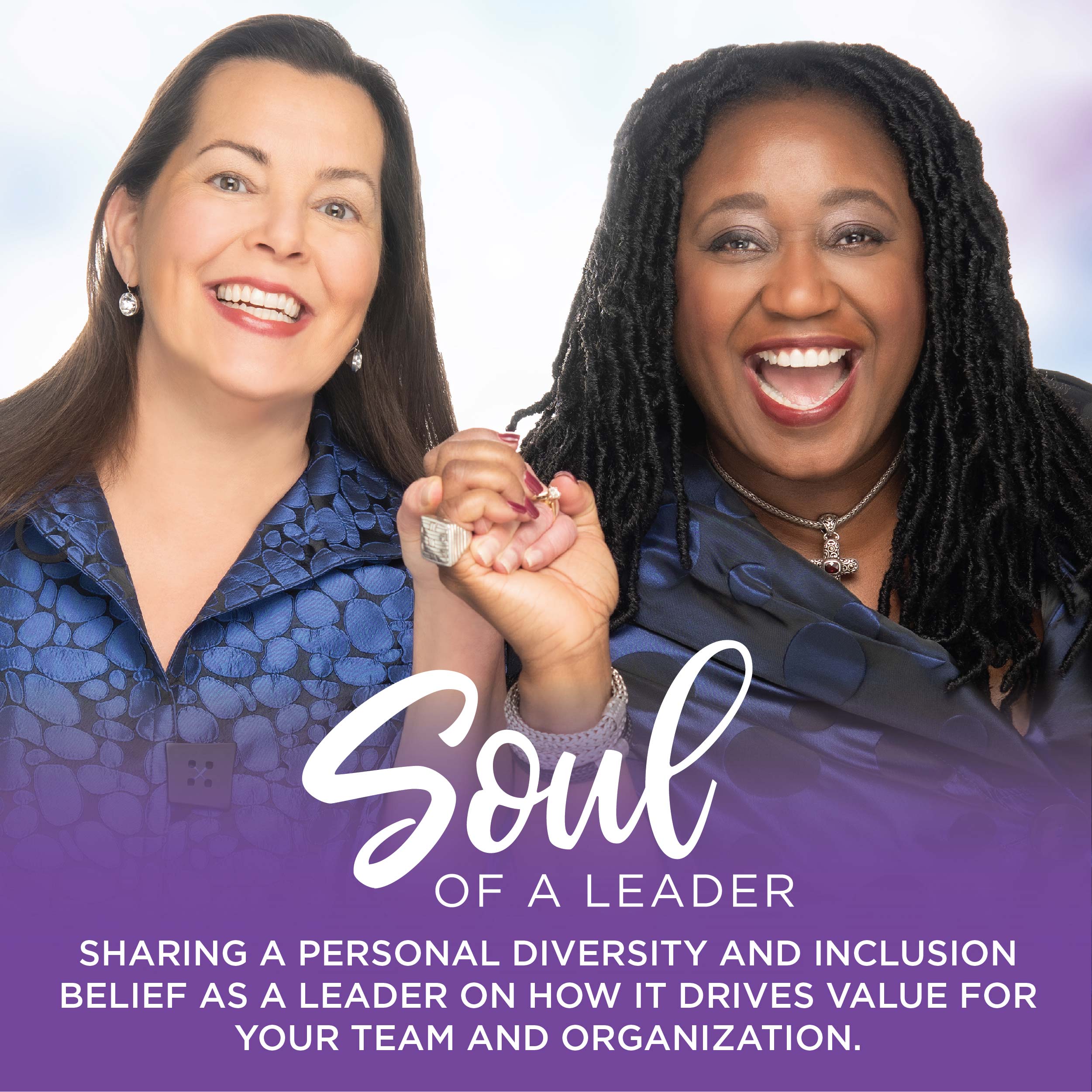
SOAL 04: Sharing a Personal Diversity and Inclusion Belief as a Leader on How it Drives Value for Your Team and Organization
subscribe
Kahlil Hogan serves as Principal/Director of Operations for the insurance group, VistaNational. Kahlil’s experience leading in the insurance business for several years has taught him many valuable lessons. Kahlil shares with us the level of leadership required in the workplace, and how diversity and inclusion are at the forefront of any growing organization. When you are your true authentic self as a leader and you actually “walk-the-walk”, you are going to create a positive, safe atmosphere in the workplace. Kahlil’s ultimate goal is to set a positive example of leadership for generations to come and to live a life full of gratitude.
We’re not 100% there yet, but we are making a lot of strides to continue to have a diverse workforce.
A boss will often tell his staff members, ‘go handle that task,’ where a leader will tell a staff, ‘let’s go together to handle that task.’
I think that it’s important that we always look to the future as very hopeful.
Walk the actual walk of what you believe in.
You’ll Learn
- The workforce is changing from a demographic standpoint, and from a technology standpoint. It’s important to keep up and keep pace with those changes.
- Ask for everyone’s input and story, to create an environment that allows individuals to thrive and to grow.
- The best leaders will not just talk the talk, but be willing to walk the walk, as well.
- Set boundaries, speak the truth, and always do what you know in your core is RIGHT.
- Always look to the future with hope and live a life of gratitude.
Resources
Transcript
Eileen:
Hello and welcome to Soul of a Leader podcast, where we ignite soulful conversations with leaders. On today’s episode, Dr Alicia and Dr Eileen sit with the principal and director of operations of VistaNational, Kahlil Hogan to discuss leading with diversity and inclusion in the workplace.
Alicia:
Welcome to Soul of a Leader podcast. Today we have Kahlil, the director of operations and principal of VistaNational here in Oak Brook, Illinois. He is responsible for overseeing the operations of the organization, which includes managing the various internal departments. In addition, he maintains a book of business where he ensures the high quality of Vista’s benefits practice, including strategic benefits planning, financial analysis, renewal negotiations, and carrier performance.
Alicia:
I’ve known Kahlil for at least six or seven years now. Time does go by fast. I met Kahlil back in 2015 at one of the clients that I had out at North Chicago. He has another partner, Rich who’s not here with us today, that we will eventually have on our show.
Alicia:
So, we wanted to welcome you Kahlil to Soul of a Leader, where we talk about leadership. And your topic today, it’s about the level of leadership that is required for diversity and inclusion. We also want to talk a little bit more in-depth about how that makes an impact on leading a team or leading a business. So, welcome to Soul of a Leader.
Kahlil:
Thank you. Thank you very much for having me. I appreciate this opportunity to speak with both of you today.
Eileen:
Thank you, And did we miss anything in your bio that you would like us to add?
Kahlil:
I am a husband and a father of two. I’ve got two teenage children that challenge me every day. But no, I think it’s a very good background of my present career here at VistaNational. Prior to VistaNational I was a senior account executive and underwriter with Blue Cross Blue Shield in Illinois for about seven years. So, I’ve been in the insurance business, in particular, for going on 23 years now.
Alicia:
Wow.
Eileen:
Great. And with that, Alicia was talking about diversity inclusion. In my career I have really focused on… a lot of people focus on diversity. I am about the inclusion part because that’s what really makes the organization thrive, and employees to be engaged, and talent to perform.
Alicia:
Yes.
Eileen:
So, can you share with me, as you’re a leader in the organization, what’s the sense of belonging on a team that you create to help with diverse, non-diverse, all types of employees to make them engage to hit a goal?
Kahlil:
Very good question. I think one of the things that we try to do here at this organization is to create an environment that allows individuals to thrive and to grow. And the way we do that is we always ask for input and suggestions from staff members, whenever we’re going over different ideas on how we can improve operations, and it’s always in situations like that when we have group meetings and we allow individuals to speak freely, that we are able to tap into that diversity because people have different viewpoints, they have different backgrounds, different stories. And oftentimes, we look to pitch ideas to a variety of audiences out there in the business world, it’s important for us to get that feedback from our staff members that are representatives of, whether it’s a person of color, whether it’s a female, whether it’s an individual who may have some type of disability, all those things have become very important for us, and listening to those individuals give their perspectives, which helps us become more effective in our jobs.
Alicia:
So, is there a time, Kahlil, when you are in your leadership role where you have to experience a level of integrity, and trust, and honesty when you talk about diversity and inclusion?
Kahlil:
Yes. So, a lot of times we’re in situations where we’re bidding for different types of business, and the question will always come up, “Who within your organization is representative of the client base that we’re looking to target?” The most recent example I can think about where I was asked specifically by an individual, “Do you have individuals of color in your organization?” My response was, “Why, yes we do.” They wanted to know specifically what my role was within the organization, and I explained to them that I’m one of the principal partners and had ownership. So, the dynamic of the conversation changed in such a way that they realized that I was in a position to effectuate change in the type of staff that we have internally within the organization. So, we’re not 100% there yet, but we are making a lot of strides to continue to have a diverse workforce. Always looking for people that again, bring that different experience and background into the organization, which will help all of us succeed.
Alicia:
One of the things is, before Dr. Eileen speaks is, you talk about the support that involves diversity and inclusion, and the input, and that also brings value. Talk a little bit about how the value stands out more when you allow those employees to be included.
Kahlil:
Very good question. And again, I think that’s where it’s important to allow individuals to have that voice. Oftentimes, we’ll have conversations and it’s hearing their perspective from their background that allows us to think differently about how we execute on a variety of different projects, I should say.
Eileen:
So, my question is, I’m part of an organization called Women in the Boardroom and In Touch Networks, where they are targeting women and diverse candidates to be part of boards. Research has shown that when that occurs, their profits, their revenues outperform other boards as it relates to not having a diverse foundation of a board. Now that is trickling down into the business here. Now as a leader, how have you noticed any change in your business objectives, your business growth or profits as you continue to initiate these plans?
Kahlil:
Good question. And again I think the reason why we were able to see the need to have that diversity within the organization was so important is because the customers and the clients that we’re out there now talking to are also becoming more diverse. It’s a changing world workforce in general. We found that the effectiveness of having people of various backgrounds included in the sales cycle process to be able to have conversations with the people across the room or the table that we’re looking to bring on new business for the organization have that connection because there’s a commonality.
Kahlil:
So, we often are very strategic about making sure that we pair the right staff members individually within the organization in those situations, where it’s going to make the most sense, where the people that we’re talking to are going to feel the most comfortable. We’re also finding that we’re able to thrive more by bringing a lot of the younger millennials into the organization because of the fact that the workforce is changing from a demographic standpoint, and from a technology standpoint. Being able to keep up and keep pace with those changes from the younger generation, we find it important to have that as part of our organization as well.
Alicia:
So is there a time, Kahlil, that you can think about where you had to make a tough decision when it came to diversity and inclusion? What was a moment that you felt that it either was going to impact the organization in a positive way or may impact in a negative way? What was the most challenging decision you had to make?
Kahlil:
One that comes to mind was a client that we picked up maybe about two years ago, and they’re a very tough group. It’s a white-collar organization and they had a certain level of expectations. I remember vividly having a conversation with the CFO at the time who made some very disparaging remarks about one of my staff members, completely unjustified. It was just the individual was very upset about something going on in his life, and he decided to take it out on my staff member. I had to make a very important business decision right then and there as he was saying these disparaging things, to defend my employee at the risk of losing that relationship with that client. I literally had to tell him, I said, “Listen, I understand you’re angry. I understand you have frustrations and concerns, but I will not be able to continue in this business venture together if you are going to say such rude things to my employee.”
Kahlil:
It did a couple of things. Number one, it let the individual know where I stood, and it also allowed him to reflect on what he had done, which luckily was reflective in a way where he realized he was in mistake and he apologized for it. But the other thing it did is it reinforced the level of support that we have here at the organization for our staff members that we truly value, so that they feel, again, empowered to be able to continue to work effectively and productive for the sake of the organization.
Eileen:
Well, and with that, I heard that you had your employee’s back.
Kahlil:
Yeah.
Alicia:
Yes.
Eileen:
You had aligned your values.
Kahlil:
Mm-hmm (affirmative).
Alicia:
Mm-hmm (affirmative).
Eileen:
And you were going to set some boundaries, even if it was jeopardizing potential growth and revenue for your organization. Those attributes and values are what an authentic leader, some of the attributes of an authentic leader in my mind are. How did you feel about that? I mean, it could be that situation or another situation where it was positive, but you stood there, you may have gone through your head, “Okay, these are my values. I’m not going to do this.” But did it take courage and what was your thought process behind that?
Kahlil:
Yeah, I think it was a bit of a defining moment for me because I did know going into that situation that it could have backfired on me, in the sense of the client had gotten upset and said they didn’t want to do business anymore. I would have to go back and have conversations with other partners about why we lost this large account, the revenue loss for the agency, those sorts of things. But I think at the end of the day when it comes to what you know in your core to be what’s right, and being able to put yourself in that position where you speak that truth, and you allow whatever to be, to be, you let the chips fall where they may.
Eileen:
And what I like about that is that being diverse and inclusive is about speaking your truth, and being authentic in the workplace, and coming as the true you, no matter if you’re 65 or a millennial, if you’re… have limited capabilities… all different types of diverse attributes. Leading that way is going to make sure that you have their backs and the followers are there.
Kahlil:
Right.
Eileen:
So, thank you so much for sharing it.
Kahlil:
Oh, sure.
Alicia:
So how do we look at or define, or how would you define leading from your extraordinary best? How do you define that in your world?
Kahlil:
That’s a very good question. I think again, it just comes back to basically walking the walk and not just talking the talk. There’s a quote that I like that I often will say to my staff, and that is that, “A boss will often tell his staff members, ‘go handle that task,’ where a leader will tell a staff, ‘let’s go together to handle that task.'” And that’s what I try to live by those words and that I’m not going to put people in the organization in a situation where I myself, I’m not there with them on the front line, helping to make sure we get through that together, and that’s the kind of example that hopefully will rub off and help them become better versions of themselves as they grow in the organization.
Alicia:
Yeah, and that’s more of a team effort, wouldn’t you say, Dr. Eileen? It’s not just, “I have a title,” it’s saying that I have a team. The efforts that we put together will support everyone, and not just single, one person, because you need more than one person to get a job done, and specifically if you’re leading, a lot of times people don’t understand the term leadership. So, I would ask this question, how do you define leadership?
Kahlil:
So I define leadership as, again, leading by example, number one, and also creating that environment for growth for individuals who are looking to prosper. One of the things that we do a really good job of here is whenever somebody comes into the organization, we clearly lay out a pathway for them based on what their objectives are. So, what we’ll do is we’ll ask them where do you see yourself in the next year, the next two years, the next five years, the next 10 years, and create a pathway for them to get from that point A to Z, and constantly having those discussions on a quarterly basis or a biannual basis to see what kind of progress they’ve made in that endeavor to get to where they want to go ultimately within the organization.
Eileen:
And I have a question, because in all my D&I initiatives, I always want to align it to the business objectives. So, what I just heard you say is the employees have a map, obviously. Can you confirm that they’re all aligned to strategic objectives and where the growth is because D&I is so much more impactful if it’s tied to a business outcome, versus just hitting a target number, or being more diverse, or saying this is the percentage of your EEOC report? And as I’ve coached people on D&I, it’s always about, how will it add to the bottom line? So, can you share how those paths that you’re doing for leadership is tied to that?
Kahlil:
Oh, absolutely. So I think, again, the overall objective of the organization is to grow and to… Obviously we’re a for-profit organization. We are not in business to do things to not make money. In order for people to have successful careers, the objective is to be profitable. So, when the core mission of the organization is to help businesses become the most competitive they can become in their industry by providing a comprehensive and strong benefits package for their employees, that mission statement resonates with every stakeholder in the organization. So, as they are doing their jobs, and as they’re moving along their career paths, that is always in the back of their minds with everything they do, with every conversation they have with their client.
Eileen:
And the impact, from what I see leading HR in a global organization, is the benefits that your team is presenting and selling, impact all aspects of that employee groups’ life.
Kahlil:
Mm-hmm (affirmative).
Alicia:
Absolutely.
Eileen:
And it ignites. when someone has to go to the hospital to experience cancer, or when a newborn is born, right? And having that behind you as a business foundation helps with your vision.
Kahlil:
Absolutely.
Eileen:
Yeah.
Kahlil:
Absolutely.
Eileen:
So, thank you for sharing that.
Kahlil:
Oh, sure.
Eileen:
Mm-hmm (affirmative).
Alicia:
So, we want to just ask you, any words of wisdom you’d like to leave with us today?
Kahlil:
Words of wisdom. I think that it’s important that we always look to the future as very hopeful. We’re in a world right now where things can be viewed as very dark and scary because of what’s going on politically in our environment. Regardless of where you stand in the political arena, it’s very divisive. What we always try to talk to, not in the organization in general but also our children and people around us in our lives is, that as long as we can look at ourselves in the mirror every night and as long as we know that we’re doing the best that we can do for ourselves and lead by example, for how we act on a day-to-day basis by adding value to the lives of others, then we can only hope that that type of demeanor resonates with those around us, and that can foster a brighter and hopeful future.
Alicia:
Wow.
Eileen:
Yeah, that’s great… It just triggered a quote that Mother Theresa said one time. Someone asked her about marching against the war in Vietnam and she said, “I won’t march against the war, but I will march for peace.” And what you said, just adding value every day, realizing you’re doing great with yourself and making peace with your home, within you, and it will just shine with others. So, I mean, to be a leader in an organization, a profitable organization with that type of mindset, it’s great. I think it’s fantastic. It’s rare and it’s wonderful that you’re here sharing that with us. I truly appreciate it.
Kahlil:
Thank you
Alicia:
Yeah, and I like this part of his wisdom tip is being authentic to yourself, knowing that if you go to bed at night, you did something good so you can rest well, and then you can wake up the next day to come into your business office and still feel good because you treated that client, or your staff with respect, is that being authentic. Oftentimes we have heard in a lot of our interviews that it’s very tough for people to be authentic when they are a leader, so they say, or not look as weak because they have to be very loyal, or very straight, or strong on a position. Oftentimes, people don’t want to be authentic about that. They want to play the politics of it. So, I heard you say, you can have your position of where you sit politically, but if you’re not doing something right and you can’t sleep at night, well where’s the value in that?
Kahlil:
Right.
Alicia:
Where’s authenticity in that? So, I like how you put that together because that is wisdom that we need as leaders in the world, that we have a new generation of people coming into the workforce, and they do look at you, Kahlil, as a leader and you have to walk the walk, so I heard that in the conversation, which is really, again, tough for some people to do. Walk the actual walk of what you believe in. Sometimes people can say something as a leader, but then they do something totally different. But guess who’s looking? Your staff, or your clients. Right? So, I got that out of that because it’s very important to understand, first of all, what wisdom is and how wisdom is important for leaders and how people are watching.
Eileen:
and leading authentically is really leading with your soul. And your soul is energy, right?
Alicia:
Yes.
Eileen:
And that’s why it’s so important that we want to continue to talk about this as under a D&I because it’s about leading with your energy and authentics, being authentic, and that’s what matters today.
Alicia:
Oh, it’s very important.
Kahlil:
I agree.
Alicia:
Very important. Well, any last words that you want to leave? Any quotes, any story before we end?
Kahlil:
Let’s see, what can I say? I think we’ve covered a lot of great, great information and great topics, and I’m very, very grateful to be a part of this discussion today. I will leave with the last thing, which is a word that I hold very, very dear to my heart, which is gratitude. I’m very, very grateful for this opportunity. I’m very grateful for every opportunity that’s presented to me on a regular basis. I also do serve on a couple of boards of not-for-profits, where the objective of those not-for-profits is to help those who are not in a position to help themselves. So, again, as you talk about or circle back to leadership, and diversity and inclusion, it’s setting that example for my children that I’m hopeful will help them to become great leaders themselves as they grow as well.
Eileen:
Wonderful. I’m so glad we asked that to get that gratitude because we’re grateful that we have this show, right? We’re grateful that you’re here.
Alicia:
Very grateful for the opportunity, Kahlil.
Eileen:
We are and that’s part of leading with your soul, is to be grateful, and to give back. So, we can’t thank you enough for adding that to our discussion today.
Alicia:
Thank you so much, Kahlil for joining us on Soul of a Leader.
Kahlil:
Oh, Thank you both. I appreciate it.
Eileen:
Thank you for joining us on the Soul of a Leader podcast. We are igniting a new way of leading with your soul and interviewing ordinary people with extraordinary impact. Thank you for listening to the stories of our leaders who will help and guide you on your leadership journey.
Eileen:
For more information on our podcast, please visit our website http://www.soulofaleader.com.
Eileen:
Thank you for listening.
With Dr. Eileen & Dr. Alicia
Conversations grounded in spiritual, authentic, and servant leadership.